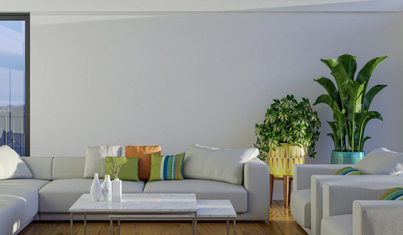
A decade ago, a luxury address in India meant a tall tower, a recognisable skyline view, and a developer's name on the gate. Today, increasingly, it means something else entirely — a hospitality brand's name on the lobby, a five-star operator running the building, and a resident who never has to leave to feel looked after.
That shift — from developer-led prestige to operator-led living — is the real story behind the branded residence boom now reshaping Gurgaon's Golf Course Road corridor and Mumbai's Worli–Lower Parel skyline.
What a branded residence actually is
A branded residence is a private home — apartment, villa or penthouse — developed in partnership with (or under licence from) a global hospitality or luxury house, which then lends its operating standards, design language and, often, its day-to-day service staff to the building.
The buyer isn't purchasing a hotel room. They're purchasing a permanent residence that happens to come with a hotel's muscle behind it:
- Trained housekeeping and concierge on a fixed roster
- In-residence dining sourced from the operator's kitchens
- Access to the brand's other global properties and loyalty tiers
- Design and finish standards audited by the brand, not just the developer
- A resale story that travels — buyers elsewhere recognise the name
Why Gurgaon and Mumbai, specifically
Branded residences need three things to make commercial sense: a wealthy resident base, a hospitality operator already present in the city, and land scarce enough that "premium" can mean something. Gurgaon's Golf Course Road and Golf Course Extension corridor, and Mumbai's Worli–Lower Parel stretch, are among the few Indian micro-markets that satisfy all three simultaneously.
Both corridors already host the operators now lending their names to residential towers. That proximity matters — a brand is far more willing to extend itself into a residential project where it already runs a hotel a few kilometres away and can supervise standards directly.
What buyers are actually paying for
Branded residences typically carry a premium of 15–30% over comparable unbranded inventory in the same micro-market. That premium is rarely about the apartment itself — fittings can usually be replicated by any competent developer. It's about consistency.
A self-managed luxury building depends on whoever the resident welfare society hires that year. A branded residence outsources that risk to an operator with a global reputation to protect. For a buyer who may spend eight months of the year overseas, that difference in operational reliability is the actual product.
The hospitality logic underneath
For the operator, branded residences solve a different problem: hotel room revenue is volatile and capital-intensive, while licensing a name to a residential tower generates fee income with comparatively little balance-sheet exposure. This is why hospitality groups have leaned into the model so aggressively over the past several years — it converts a brand into a recurring income stream without building another hotel.
That alignment of incentives is, in fact, good for the buyer. The operator has every reason to protect service standards in the building, because the same name sits on a hotel sign down the road.
Where the model can disappoint
Not every "branded" project delivers what the marketing implies. Some developments license a name for marketing purposes only, with limited operator involvement in day-to-day service delivery. The distinction matters enormously at resale and at renewal of the management contract — a building with a name but no operating presence behaves, eventually, like any other unbranded tower.
Buyers serious about this category increasingly ask one specific question before signing: who runs daily operations, and is that obligation written into the building's management contract — not just the sales brochure?
Design language as ownership signal
Branded residences also export a recognisable design vocabulary — material palettes, lighting standards, lobby choreography — that buyers learn to associate with the operator globally. For India's UHNW segment, much of whom travel and own property across several countries, that visual consistency functions almost like a passport stamp: walk into the lobby in Mumbai, and it reads the same as the lobby in London or Dubai.
That legibility is precisely why resale liquidity in this category tends to hold up better than in unbranded luxury inventory during slower market cycles — the brand, not the local market sentiment alone, anchors buyer confidence.
What this means for the next decade
As more global hospitality names secure their first or second India footholds, expect the branded residence pipeline in Gurgaon and Mumbai to widen — and, with it, more variation in how seriously each project takes the operating partnership. The category will likely bifurcate further: a handful of fully operator-run towers commanding genuine premiums, and a wider tier of name-licensed projects competing mostly on price.
For buyers, that means the diligence question only grows more important over time, not less.